
Qatari PM announces that he will not support any Iranian plan to impose fees on the Strait of Hormuz
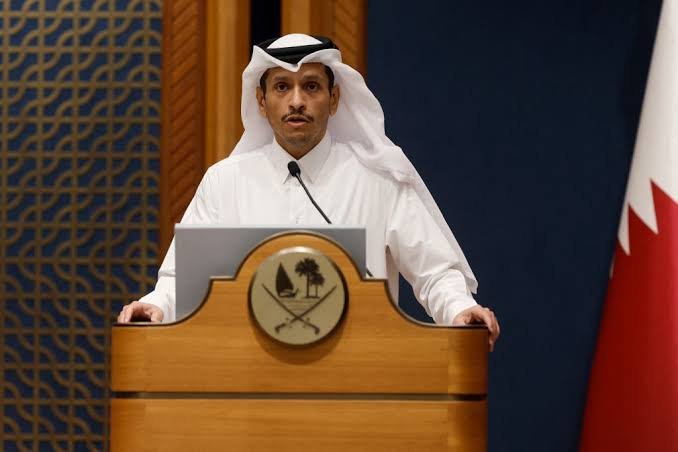
Doha: Qatar’s Prime Minister and Foreign Minister Sheikh Mohammed bin Abdulrahman Al Thani has said his country will not support any Iranian plan to impose fees on ships passing through the Strait of Hormuz. He made it clear that control of a vital sea route to the world by any single country is unacceptable.
In an interview with a British newspaper, the Qatari prime minister said that the hotline established between the United States and Iran is playing a very important role in restoring maritime traffic in the Strait of Hormuz. According to him, the purpose of this communication system is to reduce the risks posed by misunderstandings, provocations and unverified information.
Sheikh Mohammed bin Abdulrahman Al Thani warned that some elements may try to sabotage the agreement reached between the US and Iran. He said that if a ship faces a threat or threat, it should be confirmed directly with Iranian authorities to avoid any misunderstanding.
The Qatari prime minister said that if Iran presents a formal model regarding fees for transiting the Strait of Hormuz, it must first clarify its position and arguments. After that, Qatar and other relevant countries will review the proposal.
He emphasized that Qatar’s access to global markets depends heavily on the Strait of Hormuz, so the authority or control of any single country over this vital waterway cannot be accepted.
Sheikh Mohammed bin Abdulrahman Al Thani expressed hope that maritime activity in the Strait of Hormuz would return to pre-war levels within the next 30 days. He added that Qatar aims to fully restore liquefied natural gas production within a few weeks, but this will depend on the restoration of security and trade activities in the Strait of Hormuz.
According to experts, Qatar’s statement reflects the position of the Gulf countries that the Strait of Hormuz is an international waterway and its freedom and open use should be ensured.
Islamabad MoU is a declaration of America’s defeat, says Mohammad Baqir Qalibaf
Baku/Tehran: Iran’s chief negotiator Mohammad Baqer Qalibaf has described the agreement between the United States and Iran to end the Middle East war as a “declaration of America’s defeat” and said that this understanding is not the result of any pressure or coercion, but rather the fruit of the resistance, perseverance, and strength of the Iranian nation.
According to Iranian state television, Mohammad Baqer Qalibaf, while addressing a conference held in Azerbaijan, said that the Islamabad Memorandum of Understanding did not come about through force, but as a result of Iran’s strong stance and public resistance.
He said that Iran defended its national interests despite difficult circumstances and maintained its sovereignty and dignity in the negotiation process. According to him, this is why this agreement has actually become a symbol of America’s failure and Iran’s diplomatic success.
Qalibaf added that lasting peace and stability in the Middle East is possible not through external powers but only through mutual cooperation and joint efforts of the countries of the region. He stressed that the responsibility for regional security should be assumed by the countries of the region themselves.
This statement by the Iranian negotiator comes at a time when there is ongoing global debate over the recent negotiations and reconciliation measures between Iran and the United States.
Various circles are calling the agreement a significant step towards reducing tensions in the region, while Iran is presenting it as a success of its resistance policy.
According to political observers, this statement makes it clear that Tehran wants to present the agreement to the world as a diplomatic success, while the international community will continue to closely monitor the practical consequences of this agreement in the future.
Trump furious over Iran war vote, harshly criticizes US Congress
Washington: US President Donald Trump has strongly criticized the recent US Senate vote on war powers against Iran, calling it “timeless” and “meaningless.”
According to US media reports, the Senate passed a resolution by a vote of 50 to 48 calling for an end to ongoing war activities against Iran. Although the resolution is largely symbolic, it has intensified the political debate in Washington.
President Trump responded on his social media platform, saying that Iran is currently under great pressure and is close to defeat, but a vote on war powers by the Senate at such a time is a very inappropriate move.
“I had the opportunity to surround Iran and achieve my goals, but the US Senate voted for a premature and meaningless War Powers Act,” Trump wrote.
He added that this move by some senators has made their work more difficult, but they will achieve their goals no matter what.
According to Trump, “These senators may make my job difficult, but I will get it done one way or another, because I always achieve my goals.”
Political observers say that differences between the US Congress and the White House on the issue of Iran are coming to the fore. On the one hand, President Trump is taking a tough stance against Iran, while on the other hand, some members of Congress are raising questions about the scope and authority of military operations.
According to experts, this dispute could lead to further political tensions over US foreign policy and strategy towards Iran in the coming days, especially at a time when talks are ongoing between Washington and Tehran on diplomatic relations and possible agreements.
No country can impose tolls or fees on the Strait of Hormuz, US Secretary of State Marco Rubio says
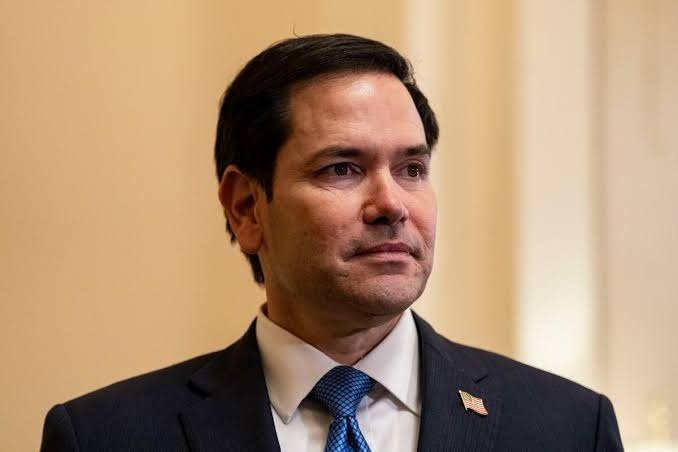
Abu Dhabi: US Secretary of State Marco Rubio has said that the Strait of Hormuz is an international waterway and under international law, no country has the authority to impose tolls or fees on this important sea route.
According to foreign media, US Secretary of State Marco Rubio arrived in Abu Dhabi, the capital of the United Arab Emirates, to take Gulf allies into confidence regarding the recent agreement between Iran and the United States. While talking to journalists, he made important statements on the future of the Strait of Hormuz and the security situation in the region.
Marco Rubio said that the Strait of Hormuz is one of the world’s most important international waterways and international law does not allow any country to impose taxes, tolls or other fees on this route. He claimed that all countries in the region agree with the US position on this issue.
The US Secretary of State said regarding Iran that Tehran must play the role of a responsible state rather than a revolutionary movement. He said that if Iran acts in accordance with its state responsibilities, there are vast opportunities for economic and diplomatic development for it.
Marco Rubio added that ending the activities of armed groups affiliated with Iran is essential to ending tensions in the region. He described the missile and drone attacks from Iraq as a threat to regional peace and said that this issue would also be discussed in the ongoing negotiations between the US and Iran.
On the other hand, Oman and Iran recently said in a joint statement that the two countries would review the future management of the Strait of Hormuz and possible fees to be charged for services provided there. Following this statement, a new debate has begun at the international level on the legal status and administrative matters of the Strait of Hormuz.
According to experts, the Strait of Hormuz is a very important route for global energy transport, through which a large amount of the world’s oil and gas is traded, so any decision related to it can have a direct impact on the global economy.