An Introduction to Forex and How does it work?
As far back as 6000 BC, Mesopotamia tribes introduced the barter system as a method of exchange. During the barter system, goods were exchanged for others. Salt and spices became popular exchange mediums as ships traded for these items. In the first form of foreign exchange, ships traded these goods.
Eventually, as early as 6th century BC, the first gold coins were produced, and they acted as a currency because they had the critical characteristics like portability, durability, divisibility, uniformity, limited supply and acceptability Gold coins became widely accepted as a medium of exchange, but they were impractical because they were heavy. In the 1800s countries adopted the gold standard.
Any amount of paper money was guaranteed to be redeemed for gold according to the gold standard. As a result, European countries suspended the gold standard to pay for World War I by printing more money.
Forex stands for Foreign Exchange Market and it is the largest financial market in the world. The volume of trade in this market is over 5.3 trillion dollars a day. This is about a third of the annual GDP (Gross Domestic Product) of the European Union.
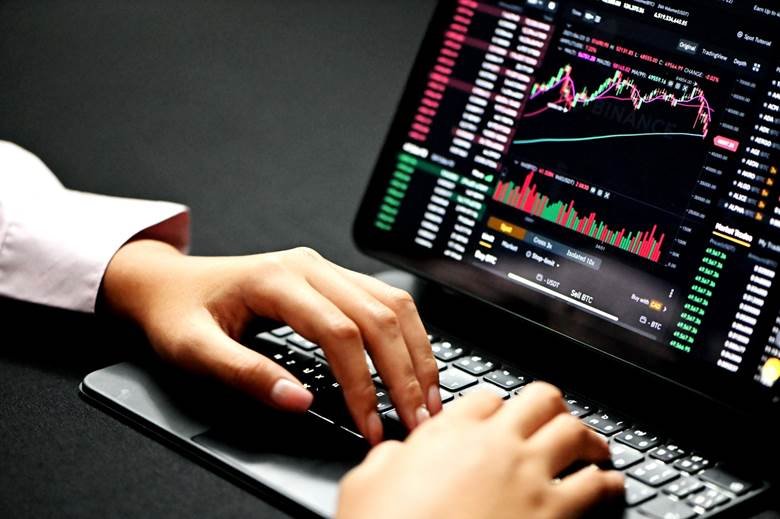
Trading in Forex means buying and selling foreign currency. This is done through a dealer or broker. Think of it as having shares on another country’s economy. The price of that currency reflects the financial market’s impression of the country’s current economy and its behaviour in the future.
How does it work?
In Forex, currency is traded in pairs. The first currency in the pair is called the “base” currency and the second one is the “quote” currency. The price of a pair will be the value of the base currency in terms of the quote currency. To illustrate, the most traded pair is EUR/USD – EUR being the base currency and USD the quote currency. If the price of EUR/USD is 1.23, this means that one Euro equals 1.23 US dollars. If the value of the Euro appreciates in the future, then the price of the pair will increase. If the Euro depreciates, the contrary will happen. Depending on how you feel the base currency will behave, you can buy or sell the pair.
Which currencies can be traded?
There are almost as many currencies to trade as countries (or economic areas like the EU) in the world. The most popular ones are in the following table. We also include their nicknames so you can refer to them like a pro.
| Code | Currency | Country / Economic Area | Nickname when paired with USD |
| USD | United States Dollar | United States | Buck |
| EUR | Euro | European Union (Eurozone) | Fiber |
| JPY | Yen | Japan | Yen |
| GBP | Pound | United Kingdom | Cable |
| CHF | Swiss Franc | Switzerland | Swissy |
Another important characteristic of Forex is its decentralization. The trading doesn’t have a physical location and is considered as “Over the counter”. This means that transactions are carried out electronically in a gigantic worldwide banking network.
It also operates 24 hours a day from Monday to Friday. You can trade anytime. The opening and closing times of the main financial centers will let you do just that. Following the sun, it starts early on in Wellington, New Zealand. Then it goes on to the Asian markets mainly in Tokyo and Singapore, later on it moves to London before closing on Friday night in New York.
Back in the ‘90s only investors with a minimum of 10 million dollars could access the Forex market. Now, you can access Forex trading through online Forex companies that offer to start you off with a much smaller amount. The minimum initial deposit that most Forex brokers accept is AUD 100 and opening an account only takes five minutes.