
Understanding the G7: Key Insights into Global Leadership and Economy
G7: History, Members, and Role in the Global Economy
The Group of Seven stands at the center of international diplomacy, economic coordination, and crisis response. For over five decades, this informal forum of advanced democracies has shaped how world leaders respond to everything from financial meltdowns to armed conflicts. Understanding the G7 means understanding how the modern global order works, who influences it, and where it might be headed next.
Quick overview of the G7 today
The Group of Seven, commonly known as the G7, is an informal forum where some of the world’s wealthiest democracies coordinate on the global economy, international security, and shared policy challenges. There is no binding charter behind it. Instead, it functions through annual summit meetings, joint statements, and ongoing ministerial coordination throughout the year. Its power comes from the collective economic and diplomatic weight of its members and their willingness to act together.
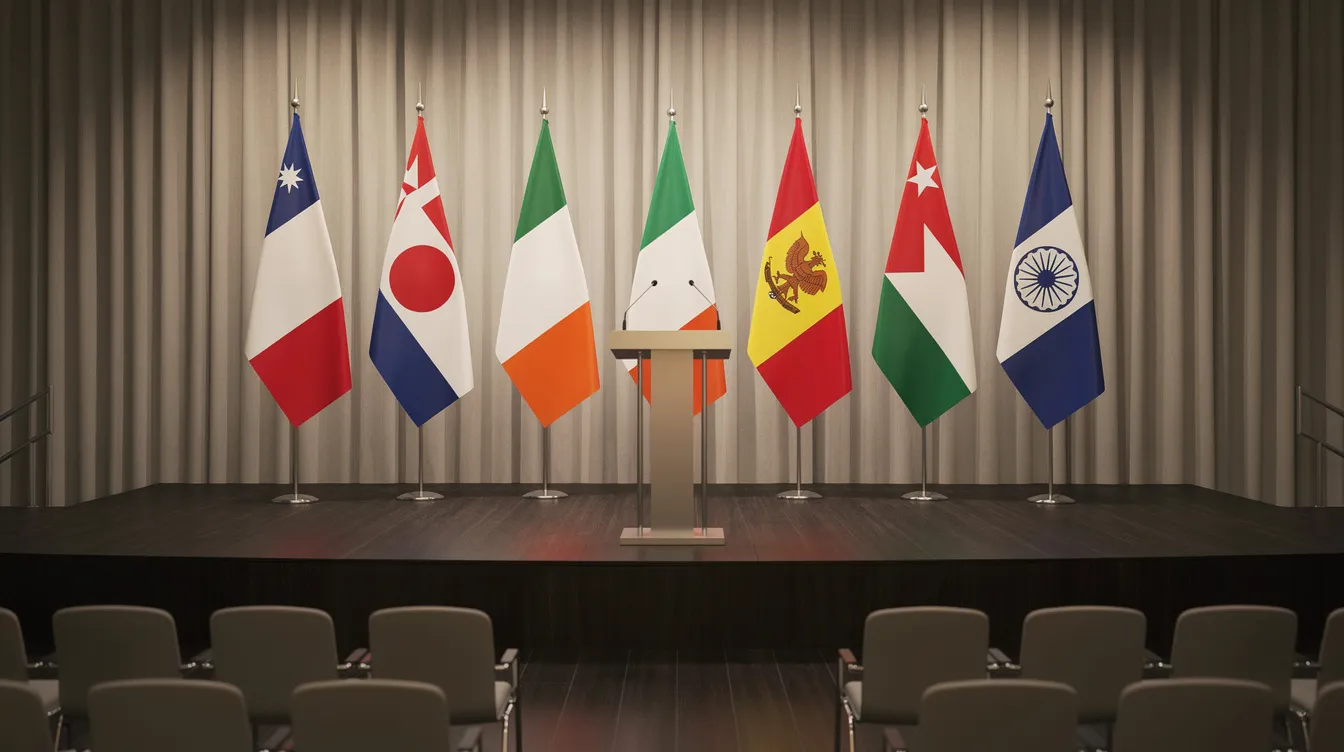
The G7 includes Canada, France, Germany, Italy, Japan, the United Kingdom, and the United States. The European Union participates at the leader level through the president of the European Commission and the president of the European Council, though it does not hold the rotating presidency. Together, these member countries meet annually to hash out coordinated responses to global issues, from financial instability to armed conflict.
In terms of economic clout, G7 members represent about 29% of the global economy in 2024 on a purchasing power parity basis. In nominal terms, their combined output stretches into the tens of trillions of dollars, and they hold roughly half of the world’s net private wealth. The G7 addresses global economic imbalances and trade issues as a principal source of norm-setting among advanced economies. It serves as a coalition for Western-aligned democracies to project unified stances on global issues. The G7 is also involved in addressing governance for Artificial Intelligence and digital safety, reflecting the evolving nature of its mandate.
The current agenda is packed. Russia’s war in Ukraine, regional instability across the Middle East, energy security concerns, climate change, AI regulation, and human rights all feature prominently. The 2025 G7 summit in Kananaskis, Canada, tackled many of these themes, and the upcoming 2026 summit in Evian-les-Bains, France, will be shaped by the recent US–Iran framework agreement aimed at extending a ceasefire and reopening the Strait of Hormuz. The G7 has met annually since 1975, and each year’s summit builds on the commitments and tensions of the last.
Origins of the Group of Seven
The early 1970s delivered a cascade of economic shocks that existing institutions struggled to manage. The collapse of the Bretton Woods fixed exchange rate system began in 1971 when the United States severed the dollar’s link to gold. This was followed by the first oil crisis of 1973–74, which sent energy prices spiraling and triggered inflation and recession simultaneously, a painful combination economists labeled “stagflation.” Western governments found themselves grappling with problems that neither the United Nations nor the International Monetary Fund could address with the speed or candor required.
Against this backdrop, the french president Valéry Giscard d’Estaing and German Chancellor Helmut Schmidt championed the idea of a small, informal gathering of leaders from the most advanced industrial democracies. The concept was straightforward: bring together heads of state for frank, face-to-face discussions away from the formality of large multilateral bodies. Finance ministers of key nations had already been meeting in an informal “Library Group” since 1973, but the leaders themselves had never convened in this way.
The first summit took place at Chateau de Rambouillet, near Paris, in November 1975. France, the United States, the United Kingdom, West Germany, Italy, and Japan sat down as the Group of Six to discuss recession, inflation, energy security, and monetary instability. The G7 was formed in 1975 with six countries, and the Declaration of Rambouillet that emerged from that first meeting laid out 15 points of cooperation on exchange rates, trade, energy, and support for the developing world. The G7 was created to address global economic challenges in the 1970s, and the format proved effective enough to repeat.
A year later, Canada joined at the 1976 summit in Puerto Rico, making it the Group of Seven. Canada was seen as a key North Atlantic, resource-rich democracy whose inclusion strengthened the group’s geographic and economic balance. That first meeting and its Puerto Rico follow-up established the enduring pattern: annual summits, a rotating presidency, preparation through senior officials, and consensus-driven outcomes.
Membership, institutions, and the rotating presidency
One of the most distinctive features of the G7 is what it lacks. The G7 has no legal treaty, permanent secretariat, or official office. It operates through political commitments and mutual peer pressure rather than legally binding obligations. Decisions require consensus among all members, and disagreements can weaken or block a joint statement entirely.
The seven member states are Canada, France, Germany, Italy, Japan, the United Kingdom, and the United States. The European Union is a non-enumerated member of the G7, participating at the leaders summit through its top institutional representatives. The European Union has participated in G7 meetings since 1981, when the European Commission president began attending regularly; since 2009, the president of the European Council has joined as well.
The presidency of the G7 rotates annually among the seven member nations, with the EU excluded from the rotation. Recent examples illustrate the cycle: Germany hosted in 2022, Japan held the presidency in 2023 with the Hiroshima summit, Italy followed in 2024, Canada took the chair in 2025 at Kananaskis, and France will host in 2026 at Evian-les-Bains. The host country’s federal government coordinates logistics, security, domestic outreach, and agenda-setting. Germany, for instance, channels coordination through its federal press and information office when it holds the presidency, often featuring the federal eagle emblem in official materials.
Behind each leaders summit is a powerful network of senior officials known as “sherpas.” Each country appoints a sherpa whose job is to negotiate agenda items, draft communiqué language, and coordinate across ministries well before leaders arrive. Supporting this process are ministerial tracks covering finance, foreign affairs, climate, health, digital policy, and more. These tracks produce detailed technical work that feeds into the final summit outcomes.
From economic club to global governance hub
In its earliest years, the G7’s mission was tightly focused on macroeconomic coordination: stabilizing exchange rates, controlling inflation, managing fiscal stimulus. The 1970s summits were essentially crisis-management sessions for finance and energy. But as the 1980s unfolded, the group broadened into security, development, and human rights. The Cold War, Latin American debt crises, and the push for democratic governance expanded what leaders discussed around the table. The G7 has historically coordinated responses to global financial crises and pandemics, and that track record only deepened over time.
Major turning points shaped this evolution. In 1985, finance ministers orchestrated the Plaza Accord to weaken the U.S. dollar and correct global trade imbalances. In the 1990s, the G7 launched a debt-relief program for 42 poor countries, channeling billions through the IMF and World Bank. In 1996, the G7 pledged $300 million for Chernobyl’s Shelter Structure, demonstrating its reach beyond pure economics. The G7 coordinates collective actions on major international crises, whether financial, humanitarian, or environmental.
The 2007–08 global financial crisis marked another shift. The G7 found itself operating alongside the broader G20, which brought emerging powers like China and India to the table. The G7’s share of the global economy declined as these countries grew, but its role as a standard-setter among democracies remained central. The G7 spearheads initiatives on climate change and public health, including the Just Energy Transition Partnerships and pandemic preparedness frameworks launched after COVID-19. In 2021, G7 leaders committed to vaccinating the world against COVID-19, mobilizing billions in funding and doses.
More recently, the G7 has embraced newer thematic priorities. The Hiroshima AI Process, launched at the 2023 summit, established guidelines for responsible AI development. In 2024, G7 countries agreed to close coal power plants by 2035, a significant climate commitment. G7 leaders’ joint statements now routinely cover human rights, gender equality, and democratic resilience, reflecting the forum’s transformation from an economic club into a broader governance hub.
The role of Russia: from G8 to renewed confrontation
Russia’s relationship with the G7 traces an arc from cautious integration to outright confrontation. After the collapse of the Soviet Union in 1991, Western leaders saw an opportunity to bring Moscow into the liberal international order. Russia began attending political sessions in the early 1990s, and the process accelerated under president Barack Obama’s predecessors who championed engagement. Russia joined the G7 in 1998 at the Birmingham summit, creating the G8. The rationale was clear: integrating a country with nuclear weapons and vast diplomatic influence could support its democratic and economic transition.
But concerns grew through the 2000s. Democratic backsliding, the Chechen wars, and the centralization of power under Vladimir Putin raised questions about whether Russia genuinely shared the values underpinning the group. Other members watched uneasily as press freedoms eroded and opposition voices were silenced.
The turning point came in 2014. Russia’s membership was suspended in March 2014 after Crimea’s annexation and its destabilization of eastern Ukraine. G7 countries condemned Russia’s actions in Ukraine in 2014, and the planned G8 summit in Sochi was boycotted. The meeting was relocated to Brussels as a G7-only gathering, and Russia’s exclusion became indefinite. The G7 condemned Russia’s annexation of Crimea in March 2014, framing it as a violation of Ukraine’s territorial integrity and international law.
Russia’s full-scale invasion of Ukraine in February 2022 cemented the rupture. The G7 became the primary coordination forum for unprecedented sanctions on Russian finance, energy, and trade. G7 countries provided hundreds of billions in military aid to Ukraine, and G7 leaders pledged to phase out Russian oil and gas imports. In 2024, the G7 agreed to loan Ukraine $50 billion from frozen Russian assets, a creative mechanism to support Ukraine’s defense and reconstruction. Russia’s removal re-emphasized the G7 as a grouping defined not just by wealth, but by shared democratic commitments.
How the G7 operates across the year
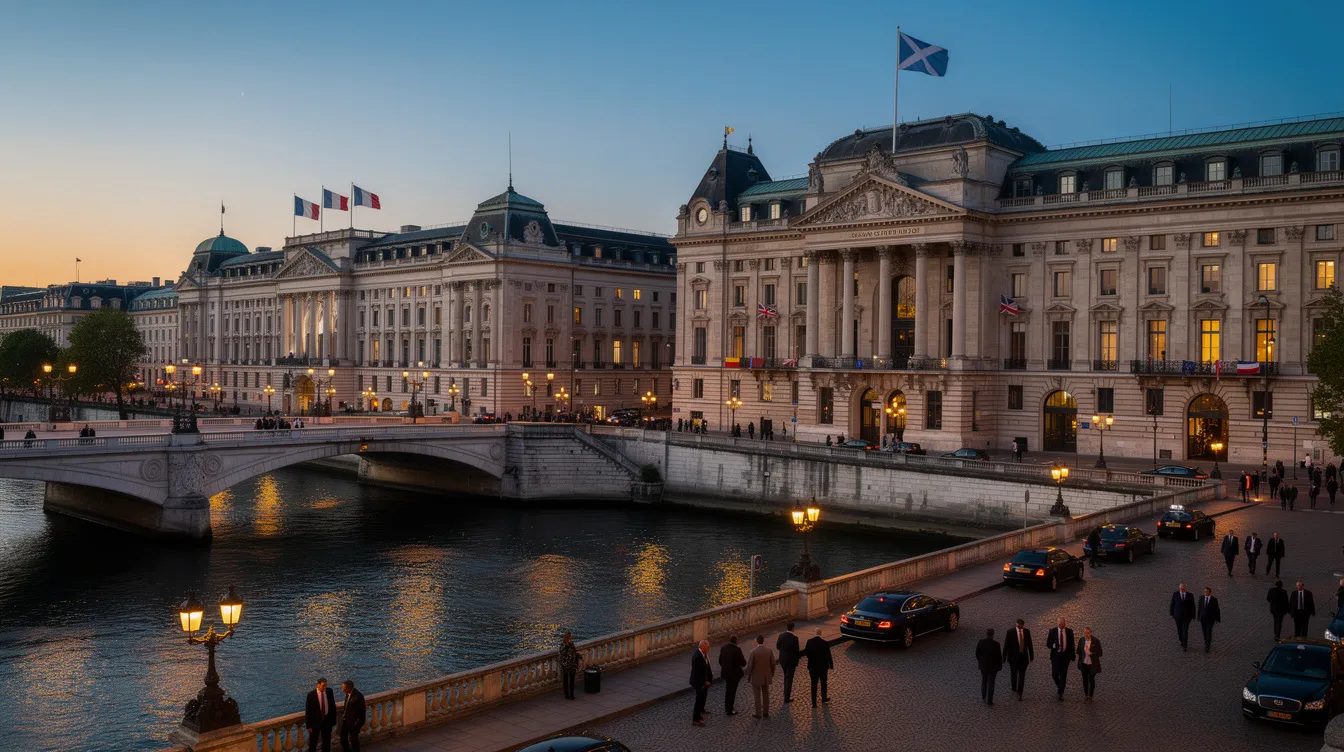
Each G7 cycle begins when the incoming presidency publishes its program, laying out priorities and selecting themes. Ministerial meetings unfold throughout the year, with finance ministers, foreign affairs ministers, climate and energy ministers, health ministers, and digital ministers each meeting to prepare detailed proposals. The cycle culminates in the leaders summit, where heads of government hold working sessions, bilateral meetings, and issue a joint communiqué or series of statements. G7 finance ministers meet at least semi-annually since 1987, making the finance track one of the most established channels.
Decisions rely entirely on consensus. There is no formal voting mechanism, and a single dissenting member can block or dilute outcomes. This played out at the 2025 Kananaskis summit, where G7 leaders agreed on energy, AI, and the middle east but failed to issue a unified closing text on Ukraine due to divergent positions among members. Similar tensions arose during the 2018 Charlevoix summit, when president Trump clashed with other members on trade. The G7’s primary significance lies in coordinating global economic policy, but that coordination depends on political will.
Key ministerial tracks shape the substance. Finance ministers tackle global economic stability, IMF reform, and debt relief. Foreign ministers address crises and human rights. Climate and energy ministers work on decarbonization and security of supply. Health, trade, and digital ministers round out the architecture. The G7 has also worked to combat tax evasion and illicit financial flows through coordinated regulatory standards.
Supplementing the official tracks are engagement groups: Business7, Civil7, Women7, Youth7, Labour7, and Science7. These non-state actors submit recommendations to G7 leaders, often emphasizing gender equality, climate justice, and inclusive growth. Canada created the Gender Equality Advisory Council for its 2018 presidency and revived it for 2025. Germany’s 2022 presidency launched the G7 Dashboard for Gender Gaps to track disparities in pay, political representation, and work-life balance across member states. Concrete outcome documents from recent summits include leaders’ declarations, thematic action plans on critical minerals, wildfire charters, and statements on AI for prosperity.
Member profiles and their roles inside the G7
Canada brings a resource-rich economy spanning energy, mining, and forestry, paired with a strong democratic tradition. Its G7 presidencies in 2010, 2018, and 2025 have championed maternal and child health, girls’ education, and gender equality. Canada also hosted G7 discussions in Nova Scotia for earlier ministerial gatherings and has consistently advocated for rules-based trade and multilateral cooperation. The G7 includes Canada, France, Germany, Italy, Japan, the United Kingdom, and the United States.
France is a founding member, having hosted the first G6 gathering at Chateau de Rambouillet in 1975. French president Emmanuel Macron has used recent summits to push climate diplomacy, digital taxation, and European strategic autonomy. As 2026 host in Evian-les-Bains, France will set the agenda for discussions on Iran, Ukraine, and AI governance. In 2019, under France’s presidency, G7 nations pledged $20 million to combat Amazon rainforest fires.
Germany is Europe’s largest economy, with an export-driven manufacturing base that gives it outsized influence in trade discussions. German chancellor Angela Merkel shaped the G7’s response to multiple crises during her long tenure, from the eurozone debt crisis to the early stages of Russia’s aggression. Germany pushes fiscal stability, deep decarbonization, and strong support for Ukraine. The German government’s press and information office coordinates communications during its presidency years, typically branding materials with the federal eagle.
Italy focuses on Mediterranean security, migration from North Africa, and energy route resilience. The italian prime minister has used G7 presidencies to bridge the gap between the Global North and South, advocating for infrastructure investment in Africa and the Sahel. Italy’s 2024 presidency advanced discussions on development finance and humanitarian protection.
Japan is the group’s only Asian member and brings a security orientation centered on the Indo-Pacific. The 2023 Hiroshima summit carried powerful symbolism regarding nuclear weapons and disarmament. Japan also champions digital standards, disaster resilience, and supply chain diversification. The G7 emphasizes the need for supply chain resilience and critical minerals security, themes Japan has strongly promoted given its own resource dependencies.
The United Kingdom carries historic diplomatic and financial weight. Post-Brexit, London has pursued a “Global Britain” agenda emphasizing defense partnerships, sanctions coordination, AI standards, and financial services regulation. The prime minister uses G7 summits to reinforce the UK’s role as a bridge between Europe and the Atlantic alliance.
The United States is the largest single economy among G7 allies and the group’s dominant security guarantor. It shapes debates on China, Russia, sanctions architecture, and the structure of the global economy. Whether under president Trump or other administrations, U.S. positions on trade, energy, and defense spending set the tone for G7 negotiations. The Washington Post and New York Times regularly cover G7 summits as major geopolitical events, reflecting the American public’s interest in how their government engages with other countries.
The European Union is not a state but participates as a powerful institutional voice. The European Commission coordinates trade, digital regulation, and climate policy across 27 member states, while the European Council sets strategic direction. The EU’s presence ensures that the positions of smaller European nations, beyond France, Germany, and Italy, are represented in G7 discussions. Multiple EU member states are also G7 members, creating a layered dynamic in negotiations.
Summits, related events, and protest dynamics
A typical G7 summit unfolds over two to three days. Leaders arrive, hold bilateral meetings, participate in working sessions on the economy, security, and climate, share working dinners, and conclude with a press conference and publication of a joint statement or communiqué. The format has remained remarkably consistent since the 1970s, though the number of side events and related events has grown substantially.
Recent summits illustrate the range. The 2023 Hiroshima summit focused on Ukraine, nuclear risk, and AI governance, with Japanese Prime Minister Fumio Kishida using the location to underscore the dangers of nuclear weapons. The 2025 Kananaskis summit in Canada centered on energy security, critical minerals, digital transition, and global partnerships. The planned 2026 Evian summit under France will deal with the post-Iran conflict settlement, the permanent reopening of the Strait of Hormuz, and renewed pressure to support Ukraine over the long term.
Summits increasingly feature outreach sessions involving invited leaders from beyond the G7. Brazil, India, South Korea, Kenya, and other countries have participated in these sessions, where discussions extend to broader global South priorities such as debt relief, food security, and climate adaptation. Critics argue these guests have limited influence on final documents, but the practice has expanded legitimacy to some degree.
Security operations around G7 summits are enormous. Host countries deploy thousands of police, impose airspace restrictions, establish maritime patrols, and create “security bubbles” around summit venues. At past summits in locations like Genoa (2001) and Heiligendamm (2007), these operations drew criticism for restricting civil liberties. Protest movements have accompanied G7 and G8 gatherings since the late 1990s. Common themes include climate justice, debt relief, global inequality, and critiques of elite economic governance. At Kananaskis, NGOs called for stronger action on climate commitments and developing-world debt.
G7 and the global economy
The G7’s economic weight remains formidable, even as it has declined in relative terms. G7 nations represent approximately 30–40% of global GDP depending on the measurement method. On a purchasing power parity basis, the figure sits around 29%. In nominal terms, the share is closer to 44–45%. G7 countries also account for a disproportionate share of global foreign direct investment and hold roughly half of the world’s net private wealth.
Finance ministers and central bank governors from G7 countries coordinate on banking regulation, IMF reform, debt relief for low-income countries, and responses to financial instability. This coordination has been a constant since the group’s founding. During the Latin American debt crisis of the 1980s, G7 governments worked with the IMF to restructure sovereign debts. In 1995, G7 nations helped assemble a support package for Mexico during the peso crisis. After the 2008 financial collapse, G7 members coordinated bank bailouts and stimulus programs alongside the G20.
The COVID-19 pandemic tested this machinery again. G7 countries enacted massive fiscal stimulus packages and coordinated vaccine production and distribution. In 2021, G7 leaders committed to vaccinating the world against COVID-19, pledging over a billion doses. In 2024, G7 agreed to aid Ukraine with $50 billion from frozen Russian assets, channeling the proceeds of immobilized Russian sovereign funds into Kyiv’s defense and reconstruction. G7 countries provided hundreds of billions in aid to Ukraine across military, financial, and humanitarian channels, making the war effort a defining economic commitment of the 2020s.
Current debates within the G7 center on industrial policy, specifically subsidies for green technologies and critical minerals processing, supply chain resilience after the pandemic and Russia’s invasion, and how to respond to China’s state-capitalist model. The tension between protecting domestic industries and upholding free trade norms runs through every summit communiqué. Compared to the G20, the G7 is less representative but more nimble, and its outputs often cascade into broader institutional frameworks.
Security, human rights, and regional crises
Starting in the 1980s, the G7 moved beyond economics into foreign and security policy, regularly addressing conflicts and regional flashpoints. Today, the G7 focuses on security in Europe and the Middle East, particularly regarding Ukraine and Iran. Joint sanctions regimes have become a core tool, targeting Russia (after 2014 and again after 2022), Iran (over its nuclear program and missile activity), and North Korea (over its missile tests and nuclear ambitions).
G7 leaders have issued specific joint statements condemning human rights violations in Belarus, Myanmar, and Hong Kong. They have called for the release of political prisoners, supported democratic movements, and framed these positions within broader commitments to human rights and the rule of law. In March 2025, G7 criticized China’s coercion towards Taiwan, marking a significant expansion of the group’s willingness to address Indo-Pacific security directly.
On nuclear proliferation, the G7 has navigated a complex path. It supported the 2015 JCPOA (the Iran nuclear deal), though U.S. withdrawal in 2018 damaged cohesion. The more recent US–Iran framework agreement extends a 60-day ceasefire, opens negotiations over nuclear enrichment limits, and aims to permanently reopen the Strait of Hormuz. That waterway handles about 20% of global oil and LNG shipping, and its closure had caused severe energy shocks. The G7’s discussions on maritime security in the Red Sea and Strait of Hormuz reflect the intersection of global security and economic stability that defines the forum’s contemporary mission. World leaders within the G7 consistently frame peace and security as prerequisites for prosperity.
Gender equality and social priorities within the G7
Gender equality rose on the G7 agenda gradually during the 2010s, evolving from a peripheral topic into a cross-cutting priority. Canada’s 2010 Muskoka Initiative on Maternal, Newborn and Child Health committed billions to reducing maternal and child mortality in developing countries. The 2018 Charlevoix Education Initiative followed, channeling significant funds toward girls’ education and women’s economic empowerment. Canada also established the Gender Equality Advisory Council to ensure gender policy informed all priority areas, not just social ones.
In 2022, Germany’s presidency launched the G7 Dashboard for Gender Gaps, a tracking tool measuring wage gaps, unpaid care work, and women’s representation in political leadership across G7 countries. This reflected a shift from aspirational language to measurable accountability. Recent presidencies, from Germany 2022 through Japan 2023, Italy 2024, and Canada 2025, have integrated gender equality across climate, digital, and security discussions rather than keeping it siloed.
Beyond gender, the G7 addresses broader social priorities. Global health security after COVID-19 remains prominent, with pandemic preparedness accords and efforts to strengthen health systems in low- and middle-income countries. The G7 also engages on migration management, refugee protection, and social protection frameworks. These social commitments, while sometimes criticized as insufficient, connect directly to the G7’s wider human rights agenda and its aspirations for inclusive growth.
G7, G20, and alternative forums
The G20 was created in 1999 at the finance minister level and elevated to a leaders’ forum in 2008 to manage the global financial crisis. It represents roughly 85% of world GDP and includes China, India, Brazil, and other major emerging economies. The G7 and G20 interact constantly: G7 members typically coordinate positions before G20 summits, and G7 countries hold key roles in international financial institutions like the IMF and World Bank.
Critics argue that the G7’s limited membership, with no representation from Africa, most of Asia, or Latin America beyond Canada and the United States, undermines its legitimacy to steer the global economy alone. Proposals for alternative or expanded groupings have emerged, including a “D-10” of leading democracies (adding Australia, South Korea, and India) and expanded G7 formats. On the other side of the spectrum, BRICS has grown as a counterweight to Western-led forums, offering other countries a platform outside G7 norms.
Despite these pressures, the G7 remains a key venue for like-minded democracies to set norms on sanctions, climate, AI, and global finance. Its smaller membership allows faster agreement on contentious issues where the G20 is often slower or less cohesive. G7 standards frequently cascade into broader multilateral frameworks, influencing everything from bilateral aid flows to development bank policies and digital trade rules. The summit ii iii iv cycle of recent years, from Hiroshima through Puglia to Kananaskis, has demonstrated that this smaller grouping can still generate momentum on global priorities.
Controversies, protests, and debates about legitimacy
The G7 has faced persistent criticism for being an elite club that over-represents the Global North. Decisions affecting developing countries on debt, climate, and trade are made with limited input from those most affected. While the G7 has taken steps like inviting guest leaders and establishing engagement groups, skeptics argue these measures are largely symbolic.
Protest movements have accompanied summits since the late 1990s. The 2001 Genoa G8 summit saw violent clashes between police and demonstrators, leaving a lasting mark on how host governments approach security. Anti-globalization campaigns, anti-war marches, and climate justice movements have become regular features. Host governments often face accusations of heavy-handed policing, with restricted protest zones and surveillance drawing criticism from civil society organizations.
Recent presidencies have attempted to address legitimacy concerns. Broader outreach to African and Asian partners, support for reforms in multilateral development banks, and engagement with youth and civil society groups have all increased. Compliance tracking provides another layer of accountability: the University of Toronto’s G7 Research Group assessed that the G7 fulfilled roughly 80% of its 2025 Kananaskis commitments, but lagged significantly on debt relief and middle east peace. Whether the group can close the gap between rhetoric and delivery remains a central question for its future credibility.
What’s next for the G7?
Geopolitical fractures are intensifying. The US–China rivalry, Russia’s ongoing war in Ukraine, tensions across the middle east, and domestic polarization within member states all pressure the G7’s capacity for coherent action. The 2025 Kananaskis summit illustrated these strains: while G7 leaders managed agreement on energy, AI, and the middle east, they failed to produce a comprehensive communiqué on Ukraine, revealing divergences that run deeper than usual diplomatic friction.
The 2026 Evian-les-Bains summit, hosted by France under french president Emmanuel Macron, carries high expectations. Key agenda items include consolidating the Iran framework agreement, ensuring permanent reopening and securing of the Strait of Hormuz, agreeing on long-term military and economic support to Ukraine, and coordinating economic policies in an era of high public debt and green subsidies. AI governance and safety, digital trade rules, climate finance for developing countries, and reforms of the global health architecture will also demand attention.
Looking further ahead, the G7 faces a fundamental question about its place in the world. Its share of the global economy continues to shrink relative to emerging markets. The absence of China, India, and representative voices from Africa and Latin America limits its claim to steer global governance alone. Yet its strengths remain real: shared democratic values, institutional depth, the ability to respond with relative speed, and a 50-year track record of adapting to new challenges.
Whether the G7 evolves into a broader democratic coalition or remains a tight seven-member steering group, its relevance will depend on measurable results rather than summit communiqués. The Evian gathering will test whether political will among these countries can match the scale of today’s challenges. For anyone tracking the global economy, international security, or the future of democratic cooperation, the G7 remains essential to watch.