
Understanding the NIF: Key Insights into Inertial Confinement Fusion
National Ignition Facility (NIF): From First Lasers to Fusion Scientific Breakeven
Introduction to the National Ignition Facility (NIF)
The National Ignition Facility is the world’s largest and most energetic laser system, housed at Lawrence Livermore National Laboratory in Livermore, California. It stands as the only device on earth to achieve fusion ignition, crossing the threshold of scientific breakeven on December 5, 2022. NIF’s goal is to produce more energy than laser input, and it accomplished exactly that.
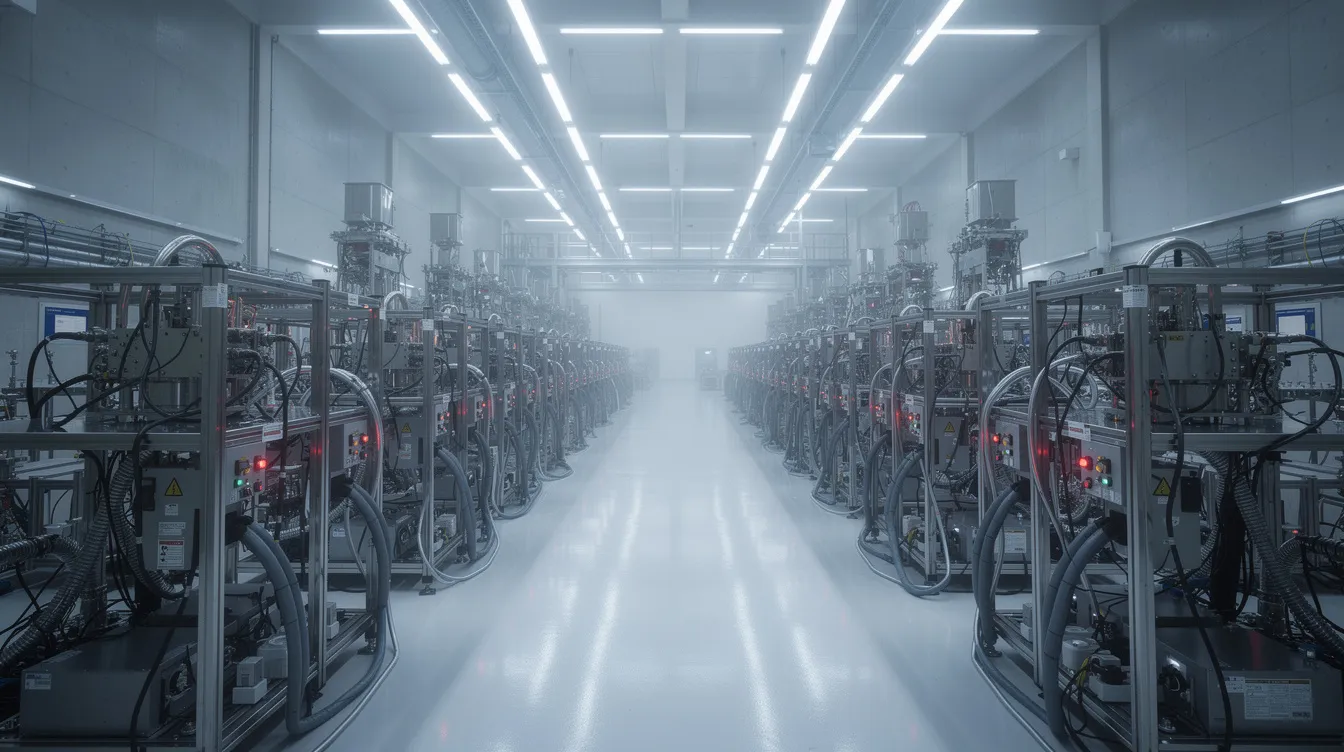
NIF serves a dual mission: studying nuclear fusion reactions for national security through the Stockpile Stewardship Program (replacing underground nuclear weapons testing) and advancing fusion energy research. To achieve this, the facility fires 192 laser beams at a small amount of hydrogen fuel, triggering a fusion reaction that releases enormous energy.
A few key terms help frame the story. A fusion reaction occurs when atomic nuclei merge under extreme heat and pressure, releasing energy. Ignition means the reaction becomes self-sustaining. Scientific breakeven means the fusion output exceeds the laser energy delivered to the fuel. The hydrogen fuel itself is a tiny pellet of deuterium and tritium weighing just milligrams.
As of 2026, NIF has delivered repeated ignition shots with growing yields, pushing output from 3.15 MJ to over 5 MJ, lending real credibility to future commercial fusion energy concepts.
Worth noting: the acronym NIF carries different meanings elsewhere. In countries like Portugal and Spain, NIF stands for Número de Identificação Fiscal and acts as a person’s or business’s official tax identification number. The NIF is mandatory for financial procedures like opening a bank account and filing taxes. In European finance, a Note Issuance Facility is a financial credit arrangement used in European markets. It serves as a mechanism for companies to raise short-term capital by issuing short-term notes and provides corporations with a flexible way to raise capital in global or regional markets. NIF allows borrowers to raise funds on an as-needed basis without renegotiating terms for each issuance. This article focuses exclusively on the fusion facility.
How NIF Creates Fusion: Inertial Confinement Basics
Inertial confinement fusion uses intense energy to compress fusion fuel faster than it can fly apart. NIF uses 192 laser beams to compress fusion fuel contained in a fusion target about 2 mm in diameter. NIF’s baseline pellet design is about 2 mm in diameter, and the target pellet typically contains deuterium and tritium fuel, known as DT fuel.
NIF primarily uses the indirect drive method for fusion experiments. The capsule sits inside a gold hohlraum, and the capsule shell can be made by coating a plastic form and then removing that core before the laser pulse heats the hohlraum enough to emit x rays. These x rays uniformly compress the capsule, creating conditions rivaling the core of stars. NIF aims for ignition with 500 terawatts peak laser power, and NIF’s fusion targets are compressed to 1000 g/cm³ density. NIF aims for fusion fuel to reach 1000 g/cm³ density, with temperatures exceeding one hundred million degrees and pressure reaching hundreds of billions of atmospheres. Fusion reactions occur when temperature and density are sufficiently high.
The difference between fuel gain and facility gain matters. Scientific breakeven compares fusion output to laser energy absorbed by the target. Facility gain would include the total power drawn from the grid, which is far greater due to laser system inefficiency.
Historical Path to NIF: Key Milestones Before Operations
NIF’s history traces back to late-1970s underground experiments and Department of Energy laser programs. The Halite and Centurion tests (1978 onward) at the Nevada Test Site used nuclear explosives to explore how much x ray energy was needed for ignition. The results led researchers to understand that more power and larger targets were required than expected.
Around 1990, Lawrence Livermore proposed the Laboratory Microfusion Facility, a 5 MJ ultraviolet driver. A Nova Upgrade with 18 beamlines was also considered. Neither was built due to costs and post–Cold War priorities. These efforts ultimately led to the decision to fund and create the National Ignition Facility as part of the Stockpile Stewardship Program, bringing together Lawrence Livermore, Los Alamos, Sandia, and the University of Rochester.
Construction and Early Engineering Challenges (1994–2009)
Early demonstrators like Beamlet and AMPLAB in the mid-1990s validated the laser architecture before full-scale construction began in 1997. Engineers faced challenges producing high-quality optics, managing vibrations in two 300-meter-long laser bay structures, and designing capacitor banks for thousands of flashlamps. External delays included severe weather and archaeological finds at the site.
A 1999–2000 re-baseline followed Government Accountability Office criticism, raising cost estimates from roughly $1.1 billion to approximately $4.0–4.2 billion. “First light” arrived in 2003 with four beams. By 2007, the project carried out multi-hundred-kilojoule shots. All 192 beams and the target chamber center integration were completed by 2009.
NIF Operations and the National Ignition Campaign
NIF was officially dedicated in May 2009. That summer, routine experiments began, focused on stockpile stewardship science and early fusion shots.
The National Ignition Campaign, led by Lawrence Livermore National Laboratory from roughly 2009 to 2012, was a coordinated push to achieve ignition. The campaign’s objectives included validating simulation codes, understanding laser–plasma interactions, and refining hohlraum and capsule designs. NIF’s lasers can deliver up to 1.8 MJ of energy, and researchers refined each laser pulse shape to manage shock timing in the DT fuel.
Despite major progress in understanding implosion physics, early shots fell short. Lower-than-expected x-ray drive, hydrodynamic instabilities, and mixing between ablator materials and fuel prevented ignition during the campaign.
DOE’s 2012 Assessment and Shift in Focus
On July 19, 2012, the Department of Energy released a report acknowledging that ignition within the original timeline was unlikely. The report praised NIF’s engineering quality but highlighted gaps between simulation and experiment, laser–plasma instabilities, and Rayleigh–Taylor instabilities. Recommended responses included thicker ablators and alternative hohlraum geometries. Following this, a greater share of NIF’s shot time shifted toward weapons-physics experiments exploring high-density materials testing and secure stockpile assessments.
Key Experimental Milestones: From Fuel Gain to Burning Plasma
Between 2013 and 2021, NIF achieved a series of milestones that carried the path toward ignition forward. In 2013, fuel gain breakeven was reported, where fusion output exceeded the energy deposited directly into the DT fuel, though the total output remained far below the ~1.8 MJ laser input. Between 2013 and 2018, successive improvements in compression symmetry, capsule surface density, and pulse shaping led to a 2018 experiment producing about 0.054 MJ of fusion energy.
The 2020–2021 period marked the transition to burning plasma, where alpha particles from the reaction deposited enough energy to dominate fuel heating. The landmark August 8, 2021 shot produced ~1.3 MJ of output from ~1.8 MJ of light input, demonstrating progress that was both scientifically significant and practically informative.
Back-and-Forth Between Fusion and Weapons Physics (2013–2019)
During this period, NIF also carried out high-energy-density materials studies. Experiments on plutonium samples between 2013 and 2015 characterized behavior under extreme pressure, supporting nuclear weapons models without underground testing. Later ramp-compression experiments in 2019 used x-ray diffraction to explore crystal structures at multi-megabar pressures, deepening our understanding of physics at extreme conditions relevant to both earth science and national security.
Scientific Breakeven and Repeated Ignition on NIF (2022–2024)
NIF achieved scientific breakeven on December 5, 2022. Approximately 2.05 MJ of laser energy was focused and delivered to the target, and NIF’s fusion energy output reached 3.15 megajoules in 2022, yielding a gain of about 1.5. Key improvements included smoother capsules, optimized hohlraum geometry, and rebalanced beam pointing for better implosion symmetry.
Subsequent shots pushed yields higher. A July 2023 experiment produced ~3.88 MJ. By February 2024, output reached approximately 5.2 MJ, with gains exceeding 130%. NIF generates 3 MJ of infrared laser energy per shot, converted to ultraviolet before reaching the target.
Why Ignition at NIF Matters for Fusion Energy
NIF remains a research facility, not a power plant. Its lasers require roughly 300–400 MJ of electrical input to deliver a few megajoules of ultraviolet light, so facility-level efficiency is far from commercial viability. However, ignition validates core physics: self-heating, alpha-particle confinement, and gain scaling. These results inform development of future driver technology like high-efficiency diode-pumped lasers and advanced direct drive concepts.
The results have inspired U.S. and international programs to explore dedicated inertial fusion energy source concepts, even as realistic timelines remain measured in decades rather than years.
Technology and Future Upgrades at the National Ignition Facility
NIF’s baseline capabilities include 192 beams delivering up to ~2.5 MJ of ultraviolet light with picosecond-level timing synchronization. Enhanced Yield Capability upgrades aim to increase laser energy, improve optics damage thresholds, and widen the parameter space for ignition experiments.
Technical upgrade themes include better beam smoothing, advanced diagnostics for neutron imaging and x-ray radiography, and improved target fabrication with ultra-smooth diamond shells and smaller fill tubes. These improvements aim to make ignition reproducible and support the Stockpile Stewardship Program’s assessments of the U.S. nuclear stockpile.
Broader Impact on Fusion Research and Policy
NIF’s ignition results have led to increased funding for inertial fusion energy research globally. Academic and industrial researchers use NIF data to benchmark simulation codes, design alternative targets, and explore hybrid fusion concepts. Beyond energy and security, NIF contributes to basic science including astrophysics, planetary science modeling of giant planet interiors, and high-pressure materials research on earth.
Conclusion: NIF’s Role in the Future of Fusion Energy
The National Ignition Facility progressed from early design debates and construction challenges through fuel gain breakeven in 2013, burning plasma in 2021, and scientific breakeven in 2022. Each milestone built on the last, forming a path forward that few thought possible when the project began.
NIF’s ignition achievements represent a genuine scientific milestone, proving that controlled nuclear fusion reactions can produce enough energy to exceed what the lasers deliver. The facility’s dual legacy spans advancing national security and illuminating a possible path toward future fusion energy systems built around hydrogen fuel pellets and high-repetition drivers.
While NIF itself will not become a power station, its experiments throughout the 2020s and beyond will shape how scientists and engineers around the world think about harnessing fusion. The physics is proven. The engineering challenges remain enormous. But fusion energy is no longer science fiction.