

Florida Map Ruling: What It Means for 2026 Elections
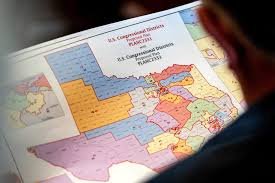
Florida Supreme Court Rejects Effort to Block 2026 Republican Congressional Map: What This Means for Florida Voters and the Lofty Battle for Congress
The fight over congressional maps has become a behemoth of a battle in the United States. Every single line drawn on a map can have a huge impact on who gets elected, how communities are represented, and which party has the upper hand in Congress. That’s why the recent decision by the Florida Supreme Court to reject an effort to block the state’s Republican-backed congressional map has got everyone talking.
The ruling means that Florida’s current congressional map will get to stay in place for the 2026 election cycle while the court cases continue. Supporters of the map claim that it sticks to the constitutional rules and that the boundaries are nice and clear. On the other hand, the critics say it gives the Republicans an unfair advantage and weakens the voting power of certain communities.
The decision may not be the last word in this fight, but it’s already causing waves in the political landscape heading into the 2026 midterms.
What Went Wrong: Why Florida’s Congressional Map Became a Massive Political Fight
Redistricting is just a normal part of the democratic process, but it seems like it always gets messy because the district lines can influence who gets elected. Florida is one of the most important states in the country – with 28 seats in Congress, it plays a huge role in deciding who controls the U.S. House of Representatives.
The dispute started when Florida lawmakers approved a congressional map that was backed by Republican leadership and Governor Ron DeSantis. Critics jumped on it straight away, saying that it broke the rules set out in the state’s Fair Districts Amendment, which was passed by voters in 2010.
That amendment was designed to stop lawmakers from drawing districts that would unfairly help one party over another.
Voting rights groups, civil rights organisations and Democratic voters argued that the new map reduced the level of competition and weakened representation for some minority communities.
As the battle raged on, critics asked the Florida Supreme Court to stop the map being used before the 2026 elections.
That request was recently turned down.
Why This Matters Beyond Florida’s Borders
Lots of voters see redistricting as just a technical thing, but the real impact is massive.
Congressional maps can affect:
- Which candidates are most likely to win elections
- How communities are actually represented
- The balance of power in Washington
- What kind of laws get passed at the national level
In many cases, one seat can make all the difference in a closely fought House of Representatives. Political analysts keep saying that control of Congress often comes down to just a handful of districts. And Florida is a big player – if one party can pick up a few more seats because the district boundaries favour them, it can really change the national picture.
That’s why both parties are keeping such a close eye on every single redistricting decision.
The Fight for Fair Representation: Agitation Surrounding Florida’s Congressional Map
This isn’t just about politics – it’s about a much bigger question: who should decide what happens in elections – voters or map makers?
Critics say that modern redistricting has become way too partisan. Instead of drawing districts that reflect communities, politicians sometimes try to draw districts that will help them win. This is called gerrymandering.
According to the Brennan Center for Justice, partisan gerrymandering is one of the most argued about topics in American elections. The reason is that district lines can make a huge difference to the outcome of an election – even before anyone casts a vote.
Florida has been at the centre of these debates for years – partly because of the Fair Districts Amendment, which was passed to stop politicians getting too caught up in redrawing the map to suit their own ends.
So with this history, many people expected the latest congressional map to get a lot of attention from the courts. And the latest ruling has a lot of significance – it’s like a signal to the courts about how they should approach election disputes as the 2026 election season gets going.
What the Court Said
The Florida Supreme Court turned down the request to stop the map being used. Importantly, they didn’t actually say whether the map is constitutional or not. They just decided not to get involved at this stage in the ongoing case.
So, the map stays in place until the courts make a decision – which means election officials have something to work with. Planning for elections takes a lot of time and effort – it involves voter education, candidate filing procedures, ballot preparation and loads of other stuff.
Changing the district lines just before an election can cause a lot of confusion for voters and local election offices.
Supporters of the court’s decision say that keeping things stable is the best thing right now – especially with the 2026 election cycle getting closer.
A Real-World Example: How the Map Could Affect Congressional Representation
To get a feel for why this case matters, let’s look at the numbers. Florida currently has one of the biggest congressional delegations in the U.S. – 28 reps to the House. Republicans hold a lot of those seats at the moment.
Studies on the new map have suggested that some of the new district boundaries could make some of the Republican-held districts safer, while reducing the number of super-competitive elections.Although the projections are all over the place, some top election experts think Republicans have a good chance of picking up some additional seats with the current map in place – especially when compared to different possible district configurations.
That’s why the lawsuit has gained so much national attention – even if the exact outcome is uncertain.
Let’s take a hypothetical scenario into account.
If Republicans manage to snag three or four extra congressional seats in Florida due to changes in the district map, those seats could end up being the deciding factor in a very close Congress.
With the margin between the two major parties in the House of Representatives often being pretty tight over recent election cycles, a few seats from one particular state can have a significant impact.
This is why political strategists, advocacy groups, and all sorts of election observers from across the country are keeping a very close eye on the Florida case.
Supporters Argue the Map Complies with the Law
Republican leaders are very strongly defending the congressional map.
They are saying that the districts were drawn according to the constitution and all the relevant law requirements.
Supporters are also pointing to some recent court decisions around race and redistricting as justification for re-examining some of the district boundaries.
Governor Ron DeSantis has been adamant that the map complies with state and federal law – and he’s been saying that a lot.
Republican lawmakers believe that accusations of partisan bias are just part of a larger political playbook and ignore the very real legal considerations that came into play during the redistricting process.
From their point of view, the map is a perfectly lawful attempt to draw districts that meet constitutional standards while also taking into account population changes and real-world geography.
Supporters also point out that politics has historically played a role in redistricting all over the country – and they think that Florida should be treated no differently.
Opponents Are Still Very Concerned
But for opponents, the issue goes far beyond just technicalities of the law.
Voting rights groups argue that the map undermines the spirit of Florida’s Fair Districts Amendment.
They claim the amendment was specifically put in place to stop political parties from getting an unfair advantage through the way districts are drawn.
Opponents are also worried about minority representation.
Several advocacy groups are saying that changes to district boundaries could make it harder for some communities to elect candidates that reflect their values.
As you’d expect, these concerns have become a major part of the ongoing litigation.
Critics think that if the map is allowed to stand for now, it could have long-term consequences if elections are run under boundaries that are later found to be unconstitutional.
That’s a concern not unique to Florida, either.
Similar debates are popping up in states all across the country as courts continue to grapple with questions about fairness, representation and election law.
National Implications for the 2026 Midterms
The Florida ruling is coming at a pretty critical moment.
The 2026 midterms are shaping up to be a real barnburner.
Historically, midterms often serve as a bit of a referendum on the party in the White House.
Every single congressional seat matters, and analysts are already looking at Florida as a key battleground in the fight for control of the House.
Because of its large population and substantial congressional delegation, changes in Florida can end up having a ripple effect across the national political landscape.
Campaign committees from both sides are following the state’s redistricting battle very closely.
Fundraising groups, political action committees and advocacy groups are all paying close attention as well.
The outcome could end up influencing campaign spending, candidate recruitment and election strategies all across the country.
What Happens Next?
Of course, despite the ruling, the lawsuit is far from over.
The underlying challenge to the congressional map is still very much active.
Lower courts will keep reviewing arguments from both sides.
There are a few different possible outcomes that could happen yet.
The courts could ultimately:
- Decide to leave the map completely intact
- Require some minor tweaks
- Order some bigger changes
- Send parts of the case back for further review
But timing is crucial, because election preparation deadlines are getting tighter and tighter.
That can often influence judicial decisions in election-related cases like this.
Even if courts later spot some issues with the map, it may take a while to put in place any fixes.
As a result, many analysts think the current map is pretty likely to stay in place for the duration of the 2026 election cycle.
Why Voters Should Care
Lots of voters focus on the candidates and their promises.
Those are very important issues.
But district boundaries also play a major role in shaping the outcome of elections.
The congressional map can decide which communities vote together and which candidates have a realistic shot at winning.
In many cases, district lines can influence political competition for a whole decade.
That’s why redistricting battles are often so contentious.
The Florida case highlights a reality of American politics: the fight over representation often starts way before Election Day.
It starts with the decisions about how electoral maps are drawn.
Understanding those decisions can help voters get a better sense of the whole political system.
Conclusion
The Florida Supreme Court’s decision to reject efforts to block the state’s Republican congressional map is a big moment in the ongoing battle over redistricting and representation.
By using the current map for the 2026 elections, there is a bit more certainty for election officials and candidates.
However, it leaves some pretty big questions unanswered about fairness, representation and the future interpretation of Florida’s Fair Districts Amendment.
The case shows that this is a much bigger national debate – and not just a state-by-state issue.
Supporters see the map as perfectly legitimate and constitutionally sound.
Opponents see it as a prime example of partisan redistricting that could influence election outcomes for years to come.As the legal battles drag on – and they seem to be showing no signs of abating – Florida is still right in the thick of one of the most crucial election-related disputes going on in the country.
For the average voter, the whole thing is a sobering reminder that the fight for power in politics isn’t just about candidates and their debate performances – the real battle is often fought in the quiet, behind-the-scenes world of electoral maps. Those lines can have a huge impact not only on how representative our leaders are of the people who put them in office, but also how policy gets shaped and what the balance of power in Washington looks like down the line.