
Get Ready for the World.Cup 2026: Your Complete Guide to the Event
FIFA World.Cup 2026: Complete Guide to the First 48‑Team Tournament
The world’s biggest sporting event is about to get even bigger. The fifa world cup 2026 kicks off on June 11, 2026, spanning 39 days across the USA, Mexico, and Canada in what will be the longest and most expansive world cup in history. With 48 nations, 104 matches, and 16 host cities, this is the tournament no fan of the beautiful game can afford to miss.
Quick facts: what, where and when
The 2026 FIFA World Cup starts on June 11, 2026, and the final match is scheduled for July 19, 2026. Here’s everything you need at a glance:
- Teams: 48 national teams, up from 32
- Matches: 104 total across the group stage and knockout rounds
- Host countries: United States, Mexico, and Canada
- Key host cities: New York/New Jersey, Los Angeles, Dallas, Kansas City, Miami, Houston, Atlanta, Philadelphia, Seattle, San Francisco Bay Area, Boston, Toronto, Vancouver, Mexico City, Guadalajara, Monterrey
- Opening match: Mexico vs. South Africa, 11 June at Estadio Azteca, Mexico City
- Final: 19 July at MetLife Stadium, New York/New Jersey region
- Format: 12 groups of 4, new Round of 32 knockout stage
- U.S. broadcast: Every match live in English on fox sports (FOX and FS1), Spanish on Telemundo/Universo/Peacock
The tournament will span 39 days, making it the longest world cup ever staged. It is also the first to feature a halftime show during the final, adding a new page to fifa history.
Host nations, cities and stadiums
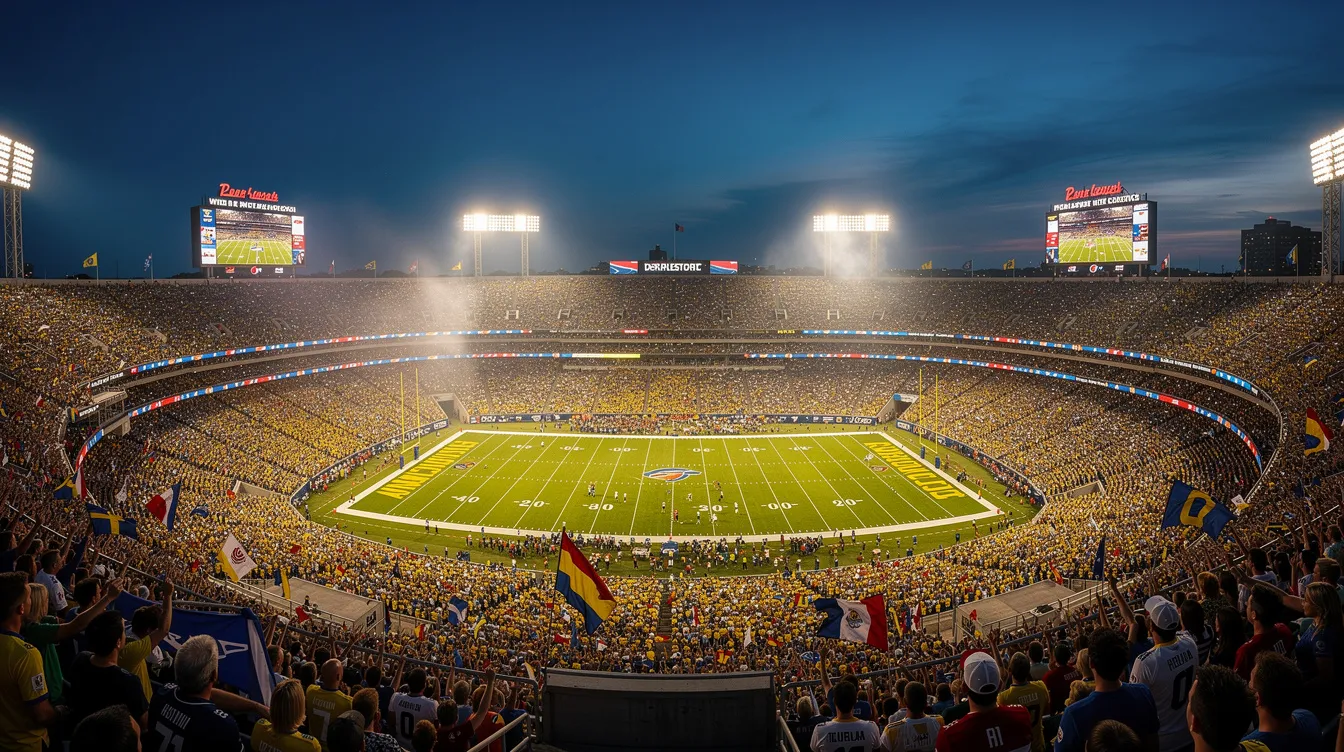
For the first time, three nations will co-host a world cup. The United States provides 11 host cities, while Canada and Mexico contribute two and three respectively, making this tournament a truly continental experience.
Key U.S. host cities include New York/New Jersey (MetLife Stadium, ~82,500 capacity), Dallas (AT&T Stadium, ~80,000), and Los Angeles (SoFi Stadium, ~70,240). The kansas city stadium – Arrowhead Stadium (~76,416) – is considered one of the loudest venues in American sports. Atlanta’s Mercedes-Benz Stadium, Houston’s NRG Stadium, and Seattle’s Lumen Field round out the American lineup.
Toronto and Vancouver will host matches in Canada at BMO Field (~45,736) and BC Place (~54,500). Mexico City, Monterrey, and Guadalajara will host matches in Mexico, with Estadio Azteca (~87,523) standing as one of football’s most legendary venues, having hosted World Cup finals in 1970 and 1986.
Fan zones and FIFA Fan Festival hubs are planned across major cities, with New York/New Jersey and kansas city expected to host especially large festival areas. Several stadiums feature retractable roofs – a welcome relief given the july summer heat.
Tournament format and group stage structure
The shift from 32 to 48 teams is the defining structural change for this tournament. FIFA approved the expansion on 9 May 2017 to give more nations a chance on the global stage.
The format works as follows:
- Group stage: 12 groups of 4 teams each; every team plays three round-robin matches
- Advancement: Top 2 from each group (24 teams) plus the 8 best third-place finishers advance to the new knockout stage, which includes a Round of 32
- Knockout rounds: Round of 32 → Round of 16 → Quarter-finals → Semi-finals → Third-place play-off → Final
- Points: 3 for a win, 1 for a draw, 0 for a loss
- Tiebreakers: Goal difference, goals scored, head-to-head record, disciplinary points (fair play), then drawing of lots
This expanded format means more matches per day, more excitement for fans, and far greater opportunities for emerging nations to create unforgettable moments.
Qualification, slot allocation and confederation formats
Qualification for the 2026 FIFA World Cup follows a 48-team allocation. Three teams automatically qualified as host nations: Canada, Mexico, and USA. The remaining 45 spots are distributed across confederations:
| Confederation | Direct Slots | Play-off |
|---|---|---|
| UEFA (Europe) | 16 | – |
| CAF (Africa) | 9 | +0.5 |
| AFC (Asia) | 8 | +0.5 |
| CONMEBOL (South America) | 6 | +0.5 |
| CONCACAF (N. America/Caribbean) | 6 (incl. hosts) | – |
| OFC (Oceania) | 1 | +0.5 |
The “.5” slots feed into an intercontinental play-off that will decide two world cup spots. For the first time, OFC receives a guaranteed direct berth – a historic milestone ensuring all six confederations have at least one direct slot.
The qualification process includes home-and-away matches for some confederations. CONMEBOL uses its traditional round-robin league among 10 nations. The UEFA qualification format includes twelve groups of four or five teams, with qualifiers and play-off paths. CAF drew 53 teams into nine groups. AFC combined its qualifying with the 2027 Asian Cup pathway, approved on 1 August 2022. CONCACAF’s remaining nations compete for slots beyond the three hosts. Russia remains suspended from FIFA and UEFA competitions, while other governance issues (such as past suspensions involving nations like Sri Lanka and Eritrea) have occasionally affected qualifying paths.
Inter‑confederation play‑offs
Six teams – drawn from AFC, CAF, CONMEBOL, OFC, and CONCACAF – will contest a play-off mini-tournament in March 2026 at Estadio Akron (Guadalajara) and Estadio BBVA (Monterrey). The four lowest-ranked teams (per November 2025 FIFA rankings) play single-elimination matches first; winners then face the two highest-ranked teams. All ties are one-off with extra time and penalties if needed. This event also doubles as a test run for Mexico’s host city operations.
Confederation‑by‑confederation overview
Each confederation runs its own qualifiers. UEFA’s 12-group European path was announced 25 January 2023. CAF updated its format on 19 May 2023. CONCACAF qualification adapts around the three automatic hosts, with other nations competing across multiple rounds for direct slots and play-off berths. CONMEBOL’s home-and-away league continues as tradition. OFC’s champion qualifies directly for the first time. Players from nations like algeria, france, germany, argentina, morocco, and bosnia and herzegovina have all been playing through these various pathways, each hoping to earn a place at the tournament.
Match calendar, key fixtures and broadcast information
The schedule runs from 11 june through 19 july, with the group stage filling the first two-plus weeks. The Round of 32 begins around 30 june, followed by the Round of 16 in early july, quarter-finals, semi-finals, and the final at MetLife Stadium in New York.
Notable early fixtures include:
- 11 June: Opening match – Mexico vs. South Africa at Estadio Azteca
- 12 June: USA plays Paraguay on June 12, 2026, at 9 p.m. et at SoFi Stadium in Los Angeles
- Group stage highlights: High-profile clashes featuring traditional powers in venues across the york metropolitan area, Dallas, and Kansas City
The men’s national team of each host country will enjoy massive home support. Expect action in every time zone across the region.
How to watch the World Cup on FOX Sports and FOX One
In the United States, FOX Sports holds exclusive English-language rights. FOX will broadcast 70 matches and FS1 will carry 34, totaling roughly 340 hours of first-run programming. FOX One streams every match live and on demand in 4K, with features like spoiler-free score hiding and multi-device support. Around 40 matches will air in primetime. Spanish coverage is available via Telemundo, Universo, and Peacock. It’s easy to follow every game – just pick your platform and tune in.
Fan experience: FIFA Fan Festival and host city activities
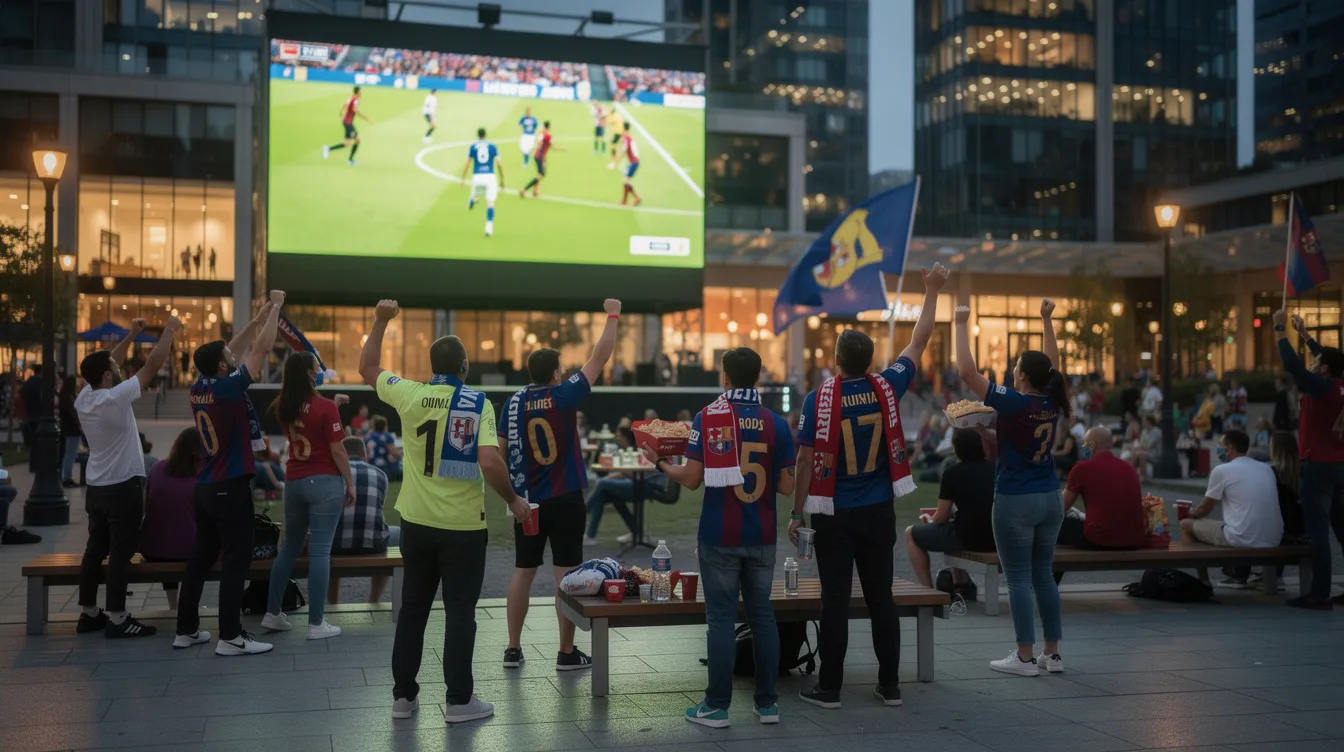
The FIFA Fan Festival is part of the 2026 World Cup events, running in june and july 2026 across all 16 host cities. Thousands of fans will gather to celebrate at the festival, which will feature food, entertainment, and cultural sharing – from live music to sponsor activations to community showcases. Thousands of fans will celebrate cultures at the festival, making it a union of the world’s football communities. Discover what each city offers through official host city websites and mobile apps for maps, transport info, and schedule updates.
Kansas City spotlight
Kansas City – the heart of America – brings its legendary tailgating culture, world-famous barbecue, and vibrant entertainment districts to the world cup. The kansas city stadium experience includes fan marches from downtown to Arrowhead Stadium on match days.
Transportation is well-organized: motorcoach bus services connect Kansas City Airport to venues, and kansas city stadium offers direct transport on match days. The FIFA Fan Festival provides regional transport options as well, making it easy for fans across the region to attend. Beyond match days, visitors can share in the city’s rich jazz heritage, explore museums, and discover nearby attractions. Don’t miss the chance to experience this city – it’s ready to welcome the world.
Human rights, legacy and city commitments
FIFA requires all 16 host city committees to develop human rights action plans covering worker protections, accessibility, anti-discrimination, and support for vulnerable communities. Los Angeles aims for an inclusive World Cup experience, collaborating with the LA County Commission on Human Relations. Legacy goals include improved public transport, stadium upgrades, and grassroots football programs for youth. While the opportunities are enormous, challenges remain – ensuring local voices are heard and that the tournament benefits communities long after the winner lifts the trophy.
Travel tips, tickets and staying informed
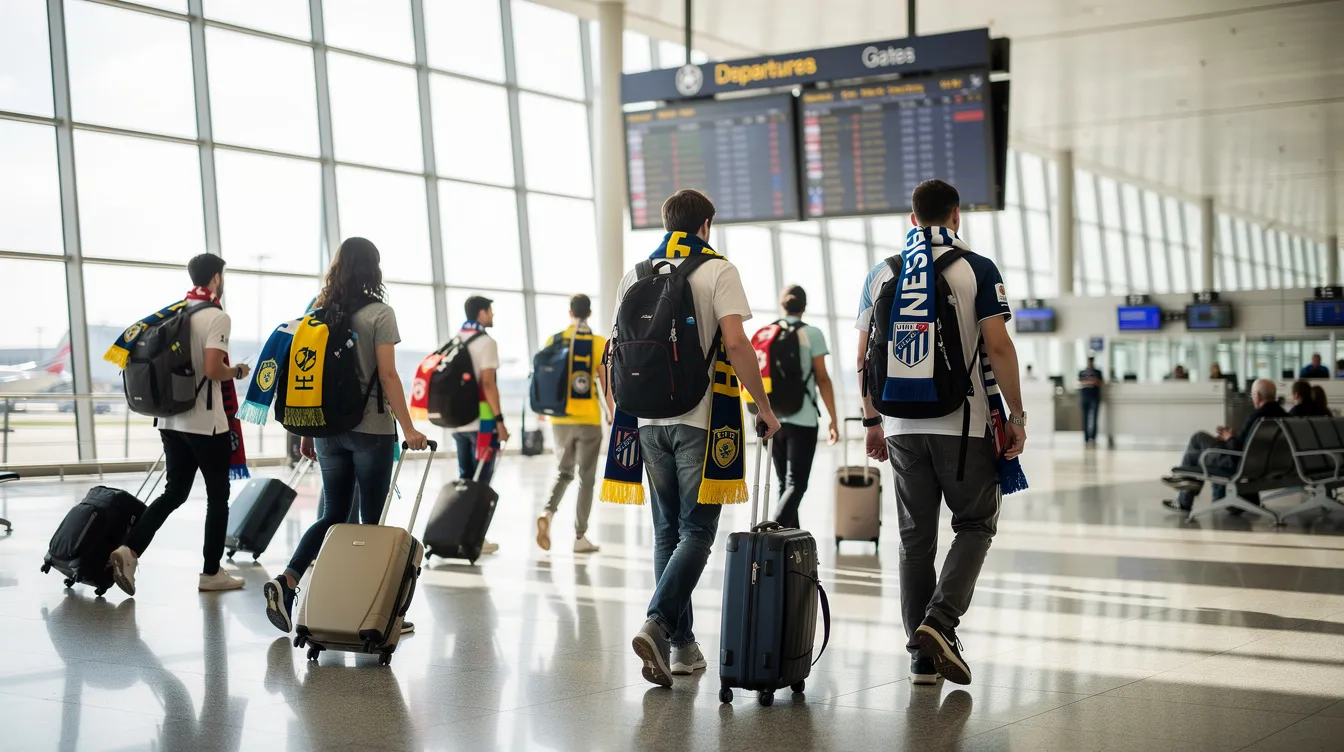
Planning early is essential. Here’s how to get ready:
- Tickets: Purchase only through official FIFA channels. Sales include random-draw windows, first-come-first-served phases, and last-minute releases. Secure your tickets well in advance – demand is global.
- Entry requirements: Check visa, ESTA (U.S.), or eTA (Canada) requirements for your nationality. A World Cup ticket does not guarantee entry into any country. Verify passport validity early.
- Accommodation: Book as soon as your date and schedule are confirmed. Prices rise fast in host cities. Consider staying in smaller neighboring cities with good transit access.
- Getting around: Plan multi-city itineraries using domestic flights, rail, or long-distance coaches. Match days bring road closures and special transit – check local events pages for updates.
- Staying informed: Follow FIFA and host committees on social media. Subscribe to official newsletters. Use the FIFA app for real-time updates on the schedule, fan festival news, and last-minute alerts.
The 2026 World Cup is the biggest global stage the beautiful game has ever seen – 48 teams, 16 cities, three hosts, and 104 matches packed into one summer. Whether you’re planning to be in the stands, at a fan festival, or on your couch at home, get ready now. Follow official channels, grab your tickets, and don’t let a single moment pass you by.